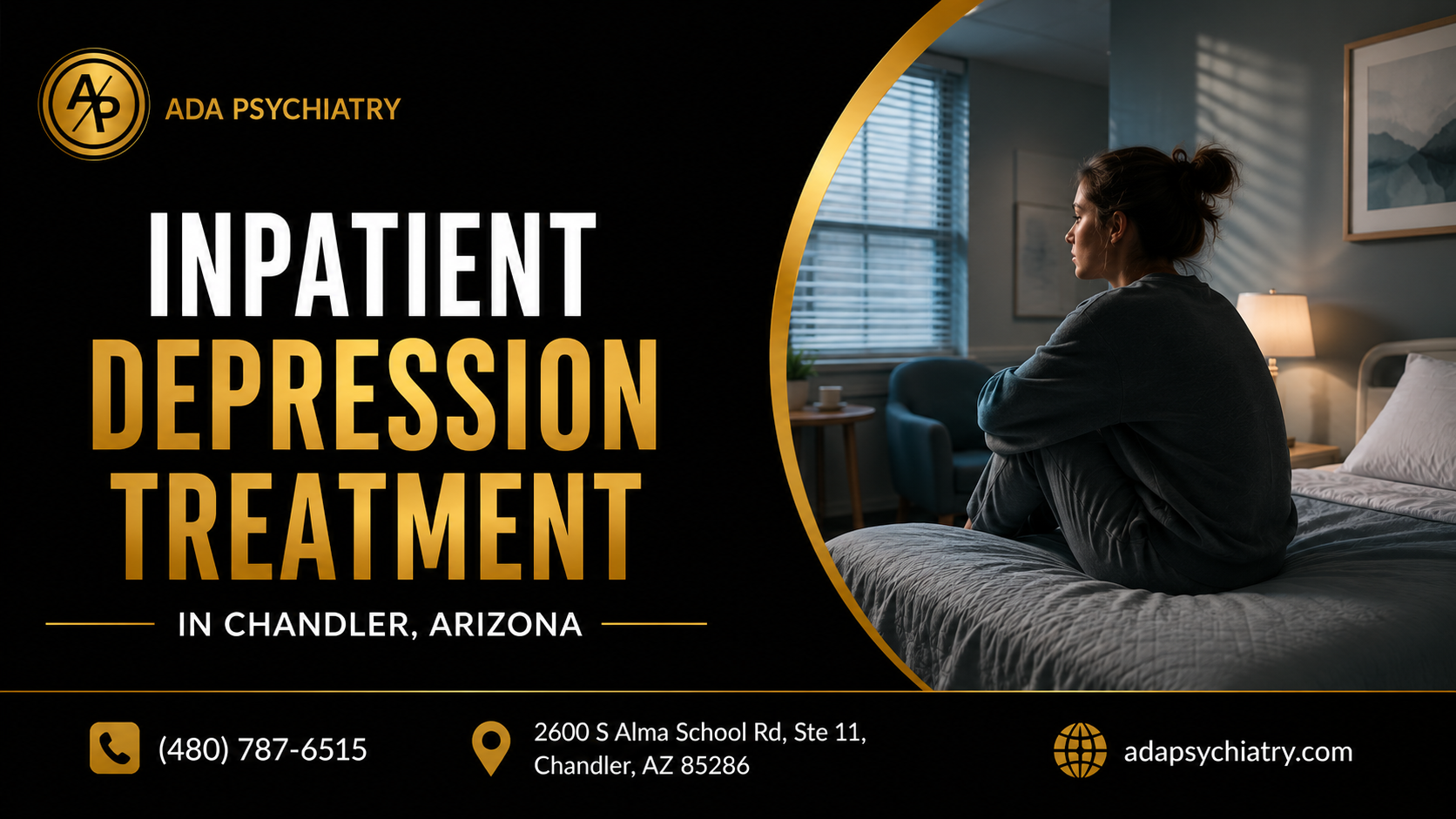
Depression can range from a difficult stretch of low mood to a crisis that requires immediate, round-the-clock care. Knowing where that line falls — and what your options look like on either side of it — can make an overwhelming situation feel more manageable. This guide walks through when inpatient depression treatment in Chandler, Arizona becomes necessary, what happens during a hospital stay, and how outpatient psychiatric care fits into the bigger picture of recovery.
If you or someone you know is in immediate danger or having thoughts of suicide, call or text 988 (the Suicide & Crisis Lifeline) right now, or go to the nearest emergency room. The information below is educational and isn’t a substitute for emergency care.
What Is Inpatient Depression Treatment?
Inpatient depression treatment refers to 24-hour psychiatric care provided in a hospital or dedicated inpatient facility. It’s designed for situations where depression has become severe enough to pose a safety risk or has made it impossible for someone to function or care for themselves. During an inpatient stay, a team of psychiatrists, nurses, and therapists provides close monitoring, medication adjustments, and structured therapy in a secure environment.
For many people, the idea of inpatient care carries a lot of fear or stigma — images from outdated media portrayals rarely reflect what modern psychiatric units actually look like. In reality, inpatient units are structured, supportive environments focused on safety and stabilization, staffed by professionals trained specifically to help people through acute mental health crises. Understanding this can make the decision to seek inpatient care, for yourself or a loved one, feel less daunting.
How Common Is Depression? Understanding the Scope
Depression is one of the most prevalent mental health conditions in the country. According to the National Institute of Mental Health (NIMH), an estimated 8.4% of U.S. adults experience at least one major depressive episode each year, and roughly 14.8 million U.S. adults had a depressive episode with severe impairment in a recent year — meaning symptoms significantly disrupted their ability to work, maintain relationships, or care for themselves.
- Depression can develop at any age, though NIMH data shows the median age of onset is 32.5 years old.
- Nearly 39% of adults with a major depressive episode did not receive any treatment — a gap that can allow symptoms to worsen to the point where a higher level of care becomes necessary.
- According to the American Foundation for Suicide Prevention (AFSP), there were 48,824 suicide deaths in the U.S. in 2024, underscoring why recognizing warning signs and accessing the right level of care quickly is so critical.
Signs That Inpatient Depression Treatment May Be Needed
Not every difficult depressive episode requires hospitalization, but certain warning signs indicate that inpatient care may be the safest option:
- Active suicidal thoughts, a suicide plan, or a recent suicide attempt
- Thoughts of harming oneself or others
- Inability to care for basic needs — eating, hygiene, safety
- Symptoms of psychosis, such as delusions or hallucinations, occurring alongside depression
- Severe depressive symptoms that haven’t improved with outpatient treatment
- A support system unable to safely manage the person’s needs at home
If you’re seeing several of these signs in yourself or a loved one, it’s time to reach out to a mental health professional or crisis service right away rather than waiting to see if things improve on their own.
What Happens During Inpatient Depression Treatment
While every facility operates a little differently, inpatient depression treatment generally follows a similar structure:
- Admission and assessment: A psychiatric evaluation determines the severity of symptoms and immediate safety risks.
- Stabilization: Medications may be started or adjusted, with close monitoring for effectiveness and side effects.
- Structured therapy: Individual and group therapy sessions help address the underlying factors contributing to the depressive episode.
- Safety planning: Before discharge, the care team works with the patient to build a plan for managing triggers and warning signs going forward.
- Discharge planning: A follow-up outpatient plan — including therapy, medication management, and support resources — is arranged before leaving the facility.
Inpatient stays are typically short-term, focused on stabilization rather than long-term treatment. The real work of sustained recovery usually continues in outpatient care after discharge.
Levels of Care: Inpatient, Intensive Outpatient, and Outpatient
Depression treatment exists on a spectrum, and understanding the options helps you or a loved one access the right level of support:
- Inpatient care: 24-hour hospital-based care for acute safety concerns or severe impairment.
- Partial hospitalization or intensive outpatient programs (IOP): Structured, multi-hour treatment several days a week without an overnight stay.
- Standard outpatient care: Regular therapy and/or medication management appointments, typically weekly to monthly, for ongoing support and relapse prevention.
Most people move through these levels of care in a step-down fashion — starting at whatever level matches their acute needs and gradually transitioning to less intensive support as symptoms stabilize.
Types of Inpatient Facilities
Inpatient psychiatric care is provided in a few different settings, and understanding the differences can help you know what to expect:
- General hospital psychiatric units: Located within a hospital, these units are often used for short-term crisis stabilization and are typically the entry point when someone presents to an emergency room.
- Freestanding psychiatric hospitals: Facilities dedicated specifically to mental health treatment, sometimes offering longer or more specialized programming.
- Dual-diagnosis facilities: Designed for individuals whose depression co-occurs with substance use, offering integrated treatment for both conditions simultaneously.
The right setting depends on the severity of symptoms, any co-occurring conditions, and what’s available and covered under your insurance plan.
How to Talk to a Loved One About Seeking Inpatient Care
Bringing up the possibility of inpatient treatment with a loved one can feel daunting, but a calm, honest conversation can make a meaningful difference. A few guiding principles:
- Lead with concern, not judgment — focus on specific behaviors or statements that have worried you, rather than generalizations.
- Avoid minimizing their experience or rushing to reassure them that things will be fine; instead, validate that they’re going through something serious.
- Offer to help with logistics, such as researching facilities, making calls, or accompanying them to an evaluation.
- If there’s any immediate safety risk, don’t wait for the ideal moment to have this conversation — contact 988 or emergency services right away.
Cost and Insurance Considerations for Inpatient Care
Inpatient psychiatric care can be a significant expense, and understanding your coverage ahead of time — when possible — can reduce stress during an already difficult situation. Most health insurance plans, including Medicaid and Medicare, are required to cover medically necessary mental health treatment, including inpatient care, though copays, deductibles, and network restrictions vary by plan. If a crisis is unfolding, don’t let cost concerns delay seeking emergency care — hospitals are required to stabilize patients in a psychiatric emergency regardless of ability to pay, and financial questions can be sorted out afterward.
Life After Inpatient Care: Why Outpatient Follow-Up Matters
Leaving inpatient care is a major milestone, but it’s not the finish line. Consistent outpatient follow-up — including depression treatment, medication management, and supportive psychotherapy — plays a critical role in preventing relapse and rehospitalization. This is where a practice like Ada Psychiatry becomes an essential part of the recovery process, whether you’re stepping down from a higher level of care or working to prevent a crisis from developing in the first place.
How Ada Psychiatry Supports Your Depression Treatment Journey
Ada Psychiatry in Chandler, Arizona provides comprehensive outpatient psychiatric care, including psychiatric evaluation, medication management, and supportive psychotherapy. Our team can help at multiple points along the way: identifying early warning signs before a crisis develops, supporting you through step-down care after an inpatient stay, or providing consistent, ongoing care to help prevent depression from escalating. Learn more about our full range of services or explore care for mood disorders more broadly.
Frequently Asked Questions
1. How do I know if I need inpatient depression treatment instead of outpatient care?
Inpatient care is typically necessary when there’s an immediate safety concern — such as active suicidal thoughts, a suicide plan, or an inability to care for basic needs. If you’re unsure, a psychiatric evaluation can help determine the right level of care. When in doubt, especially with any safety concerns, contact a crisis line or go to the nearest emergency room.
2. How long does inpatient depression treatment typically last?
Inpatient stays are usually short-term, often ranging from a few days to about two weeks, with the primary goal of stabilizing acute symptoms and safety risks. Longer-term recovery continues through outpatient therapy and medication management after discharge.
3. What should I expect after being discharged from inpatient treatment?
Before discharge, your care team should help you set up a follow-up plan, which often includes outpatient therapy, psychiatric medication management, and a personalized safety plan. Attending these follow-up appointments consistently is one of the most important factors in preventing relapse.
4. Does Ada Psychiatry provide inpatient depression treatment?
Ada Psychiatry provides outpatient psychiatric care, including evaluation, medication management, and supportive psychotherapy for depression. We can help you find the right level of care, including a referral for inpatient treatment if needed, and we’re also here to provide consistent outpatient support before or after a higher level of care. Contact us to discuss your specific situation.
5. Is depression treatment covered by insurance?
Coverage varies by plan and by the type of care. Ada Psychiatry is in-network with several major insurers, and offers a self-pay fee schedule for those paying out of pocket. For inpatient facilities, contact your insurance provider directly to confirm coverage details.
Reach Out Before a Crisis Escalates
If you’re navigating depression — whether you’re looking for early support, ongoing outpatient care, or help stepping down after an inpatient stay — Ada Psychiatry is here to help. Book an appointment online, or contact us to get started. If you’re in crisis, call or text 988 for immediate support.
Ada Psychiatry | 1820 E Ray Road, STE A110, Chandler, Arizona 85225 | Phone: 480-526-9292